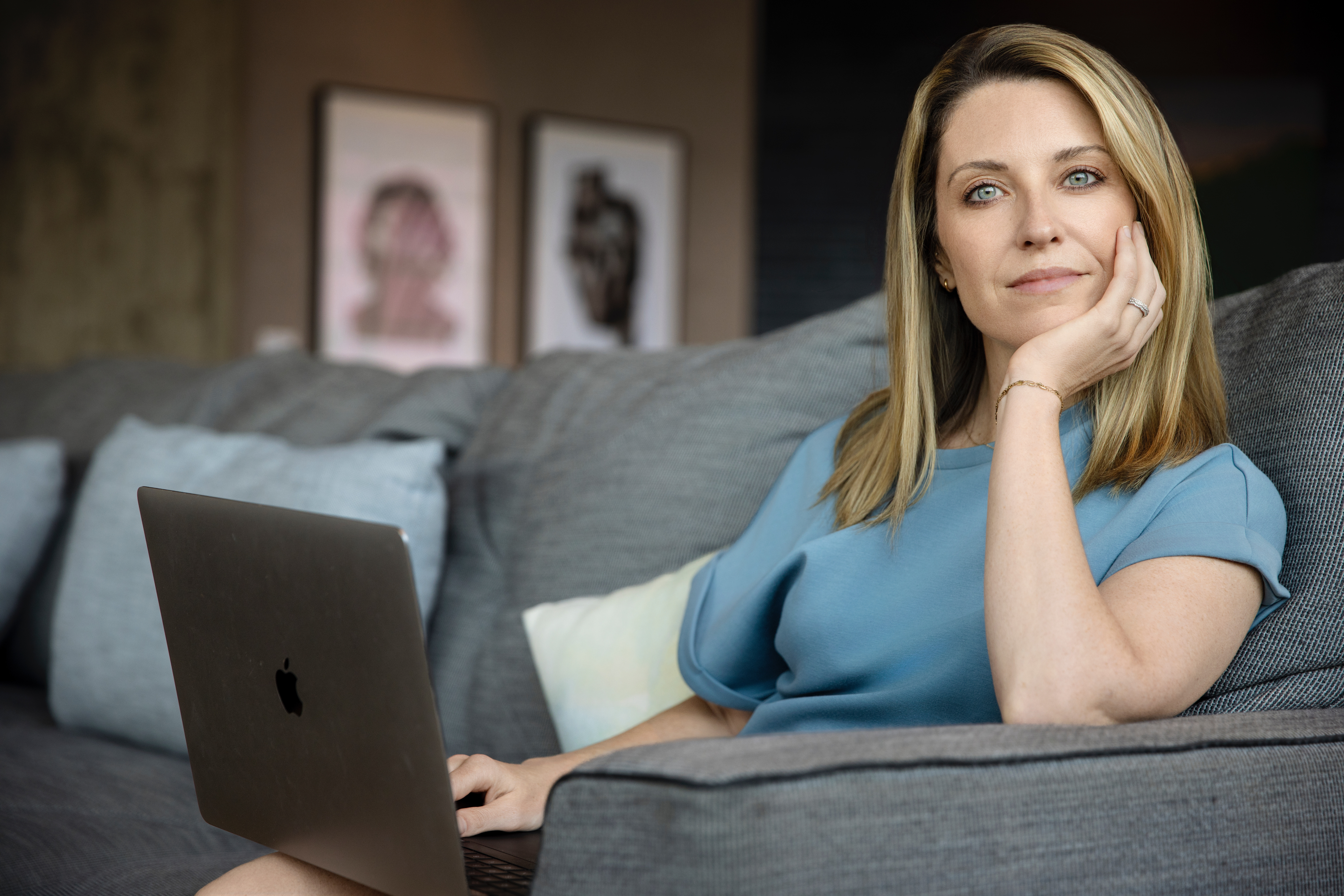
Community doesn’t always begin with intention — sometimes it finds us. For Jill Weber, PhD, archaeologist, restaurateur, and cofounder of the Sisterly Love Collective, the pandemic became an unexpected doorway into belonging. What followed was a community of women that felt immediate, grounding, and enduring. In this conversation, Jill reflects on connection, ambition, motherhood, and the evolving definition of a life well lived.
A Circle That Formed Without Asking
What role did community play in your journey to where you are now?
Strangely, the pandemic really pushed my community ties. Pre-pandemic, coming from academia into the restaurant business, I didn’t really know where I fit. I felt most comfortable doing research and speaking at conferences. I also had my loyal restaurant followers who would come in, and I would do wine tastings with them. They were my community in the restaurant business. Outside of that, I didn’t really have one.
Then the pandemic came along. I suddenly realized, Hey, I like these women over here. I like being part of this group. I want to continue this. The community emerged, and I loved it. So rather than me finding a community, my community found me, and I accepted. I thought, This is great. I’m not leaving now.
I knew these women who are now my co-organizers of The Sisterly Love Collective, but I never would have called them friends, hardly even acquaintances in many cases. Now they’re my friends, and it’s really great to be part of it. I see women hesitating to come in, but after one meeting, after one event, they’re in. It feels like we’ve all been part of this group for a long time because we share so much.
A Life Meant to Be Lived in Motion
When you think of a life that you love, are you living it? And what is the life that you love?
You asked me about my kids, and that obviously colors this whole thing. The life I was living pre-kids was the life I wanted. That was pre-pandemic and pre-kids. I love my kids, and I’ve had the conversation, would you change it? It was such a nice life. But no, I wouldn’t.
That life is having the ability to say, Hey, I’m going to leave for two or three months because my job is taking me to Syria. I’ll be there for a while, and then I’ll come back. I have a partner, now my husband, who accepts that about me. I get to do all the things I love, research, writing, speaking, traveling, and then coming back to my routine, which I do like. I like routine.
It really has to involve stairs. I have a mantra: if I’m anywhere and I see stairs, I have to take them. Traveling, hotels, whatever, it’s always the stairs. Especially outdoor stairs. They’re so fun. I don’t know why, but they are.
That life is about being, living, experimenting, and experiencing other things. I love having a restaurant. I love teaching people about wine. I love a life built around these wonderful things.
Now I have that life with kids, which limits everything. I can’t leave for three or four months. I tried leaving for two weeks, and that was fine during the summer. During the school year, my husband was like, I can’t do it. He’s only ever left for about two days, so I totally understand.
That’s the life I want, to be able to come and go. Even though I love community and feel connected to it even when I’m away, I want to be able to leave for a long time and come back and step right back into it. I want to expand my world and my perspective to encompass everything and everyone, everywhere. That’s me.
Building Authority Where It’s Hardest
If you were to define success for you today, what’s the definition?
I’ve always liked the idea of being a thought leader, especially in areas I had to enter with a little more difficulty, like the world of wine. I want to be the ancient world wine thought leader. To me, that’s success. When people think of ancient wine, they think of Jill.
I’ve created that space. I’ve earned it by doing something creative. Some things are easy for people. For example, archaeology isn’t easy, but what I do in it, I love so much. It’s like solving puzzles. I’m so good at it that sometimes I feel like, Of course I’m successful at this. This is easy for me.
But wine, getting people to understand how interesting and wonderful ancient world wine is, that would be such a coup. It’s so much harder than doing well in archaeology. That, to me, is success.
But success also involves people. Something like Sisterly Love, we won an award from Rad Girl for Connector of the Year. That was so cool. Being up there with all these people I love, receiving that award, was amazing. Success is also being recognized for doing something I believe is important.
Clearing the Path for Deep Work
What habits allow you to do this work and reach your definition of success?
I’m actually still developing habits. I didn’t always have good ones around work. For archaeology, work emerges. It’s about following where the research takes you. The habit there is sitting down and devoting the hours to the data so you can see what’s going on.
Restaurants were different. I started looking at the people around me and how they operate. For instance, our mutual friend Cassandra, she always calls me and checks in. It makes her feel good, she checks it off, and then she moves on.
I’m trying to develop habits that help me check boxes so I can clear the path and then actually sit down and do the work. I have to do the Washington Post crossword puzzle. Otherwise, I can’t make it through the day. Then I look at wine news, make sure emails and Slack messages are checked, and then I look for wines.
That’s really what I do. I look for wines. That helps me figure out my next event and what I want to research next. It’s an entry point into other fields. That morning routine, looking at wines I want to taste and wines that look different, sets me in all kinds of directions. Other than that, I don’t have a lot of habits.
Why Change Feels Heavier for Women
What do you think keeps women from stepping into opportunities presented to them?
I was just looking at my two youngest kids, a girl and a boy, and they’re incredibly different. The girl is so concerned with fitting in. The boy is too, but not to the same degree.
What I realized is that it’s not society creating that difference. Girls put themselves out there so much more. Boys are more like, I’ll stay home with mom and dad. Girls are like, No, I’m getting away from you. Me and my friends are going out.
They’re so bold and precocious that it becomes a little scary. Suddenly it’s about dressing alike or finding ways to make all these bold decisions feel safer. I think something similar happens with women.
Women are always doing things. During the pandemic especially, all the changes were made by women while men waited. Women do this every day, stepping outside their comfort zones in a million little ways. Then a big opportunity comes along, and it’s like, Wait. How do I handle this when I’m already juggling everything else?
I think it’s internal. At this point, I don’t feel it’s society actively holding women back as much as the fact that women have long been the drivers of change, with very little support. They need stability somewhere. It can’t all be constant change.
The small changes start to overwhelm the big ones. To make a big change, you have to stabilize the small ones. There has to be balance and harmony, and without that, hesitation sets in.
Stabilize the Small Things, Then Leap
What advice would you give women who are hesitating to take an opportunity?
Make the shift and find the help. Women are great at shifting, but not great at delegating or stepping away. That part is crucial.
Stabilize what you can. Delegate, cut back, hire someone, ask for help. Once that’s stable, the opportunity isn’t additional pain anymore. It’s just an opportunity. Take it.
Talk to someone. Especially someone who’s busier than you.
Being Remembered for What You Gave
What do you want your legacy to be?
I want to be recognized for contributions that are meaningful to me. The definition is still evolving, but what matters is that it was significant to the community, helpful to other people, and made a difference in the city.
I feel very comfortable with my archaeology legacy. I’ve made discoveries, written important work, and there’s more to come. But I want people to remember that I gave them something that made them happy or improved their lives. That would be very meaningful.
About Jill Weber
Jill Weber, PhD, is a professional archaeologist and restaurateur. She has spent 30 years working in the Middle East and Italy, and has 3 restaurants in Philly: Jet Wine Bar, Rex at the Royal, and Sor Ynez. Jill is a cofounder of the Sisterly Love Collective and member and past-president of Les Dames d’Escoffier Philadelphia.